
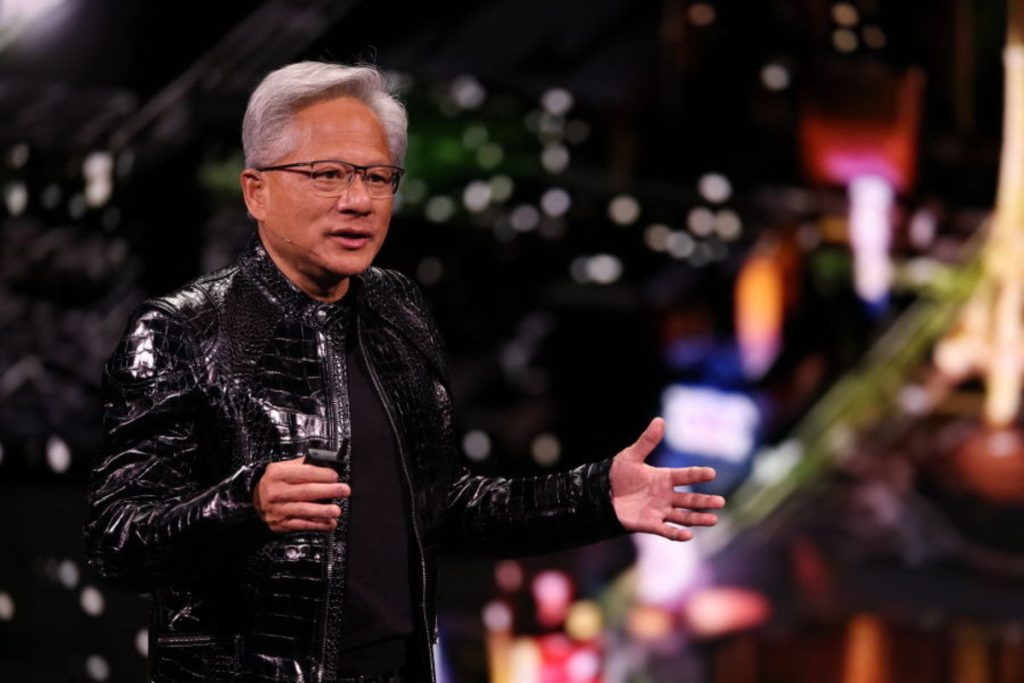
Eleven days after he resigned, Jensen Huang is back. Nvidia’s board announced on Monday morning that it has unanimously voted to reinstate him as president and chief executive, effective immediately — a complete reversal of everything the company said last week.
This is everything you need to know about the U-turn, the eleven days that led to it, and what still has not gone away.
The announcement
Nvidia announced the decision on Monday 23 November, before the US market opened. The board voted unanimously to reinstate Huang as president, chief executive and a member of the board, effective immediately.
The board said it was satisfied with Huang’s candour and ability to lead, and that it had received input from senior levels of the United States government, on the basis of which it is confident his reinstatement poses no national security risk.
“The Board believes Jensen is the right person to lead NVIDIA, and that his reinstatement is in the best interests of our stockholders, employees, partners and customers,” said Harvey Jones, the board chair, who remains in the role.
Huang said he was honoured to return and that he could not wait to get back to work. Colette Kress, the chief financial officer who served as interim chief executive for the last eleven days, returns to the finance job full time.
Nvidia also filed the reinstatement with the US Securities and Exchange Commission.
How we got here: eleven days
The speed of the reversal is the story. Here is what happened, in order.
On Thursday 12 November, Huang resigned as president, chief executive and a member of the board, effective immediately. The announcement gave no reason and thanked him for his 33 years. It came after reports of his close relationship with a former executive at a Singapore-based company, a woman US intelligence officials reportedly identified as a Chinese intelligence asset suspected of passing information to Beijing. A separate investigation had alleged that intermediary networks linked to that same Singapore company had routed around 240,000 banned Nvidia AI chips, worth about $7.5 billion, into China over three years. Those claims have not been verified by a government agency.
The board had opened an independent investigation on Sunday 8 November, run by outside lawyers and a former federal prosecutor. It later hired the law firm Wachtell, Lipton, Rosen & Katz and former acting US attorney Joon H. Kim to lead it.
The market reacted before the announcement. The shares fell 8.6% in after-hours trading on Wednesday 11 November, as soon as reports said the board was preparing to remove Huang, and opened on Thursday at $151.01, touching a low of $148.80. From the 3 November close to that low, the company lost more than $1 trillion in market value.
On Tuesday 17 November, the board said it would not bring Huang back. Board chair Harvey Jones said the board had unanimously accepted Huang’s resignation after disclosures of personal behaviour he described as inconsistent with the company’s code, standards and cultural norms, and rejected Huang’s offer to return. The board retained the executive search firm Heidrick & Struggles and began approaching outside contenders, including Arm chief executive Rene Haas.
That same day, Nvidia reported third-quarter results that beat expectations — revenue of $115.8 billion, up 103% on a year earlier, with data centre revenue of $107.6 billion — and guided fourth-quarter revenue to about $130 billion. The shares barely moved. The business was fine. The leadership was the problem.
The pressure to bring him back kept building. A “Stand With Jensen” petition passed 180,200 signatures. Elon Musk publicly backed his return. President Trump said he would not mind seeing Huang reinstated, adding that he thought Huang had “learned a big lesson”. Huang himself said publicly last week that he wanted to return.
Then came the investigations. The Wall Street Journal reported on 17 November that the SEC is conducting a civil investigation into whether Nvidia’s disclosures misled investors; Reuters confirmed the report. On Thursday 19 November, California attorney general Rob Bonta served an investigative subpoena on Nvidia, probing whether its advanced chips violated US export restrictions by flowing into China and whether Nvidia misled investors and the public about related risks. A shareholder class action had already been filed on 9 November in federal court in San Jose.
On Friday 20 November, the shares plunged 14.01% to close at $125.53 — the steepest one-day fall since January 2025, capping the worst week since the 2008 financial crisis and a seventh straight weekly decline. The fall deepened in the afternoon after Reuters reported, citing two people briefed on the matter, that SEC enforcement staff are examining potential accounting issues at the company.
Three days later, the board changed its mind.
The market’s verdict
The market liked the news before it had even opened. The shares closed Friday at $125.53. In pre-market trading on Monday they were at $136.08, up 8.4% on the Friday close, as of 08:53 EST.
That is still about 44% below the all-time high of $243.37 reached on 6 October. The company is worth about $3 trillion, down from more than $4 trillion when Huang resigned.
One prominent tech analyst had put a price on Huang himself: the shares are worth $300 with him as chief executive and $225 without him. The market is now testing that call in real time.
What has not gone away
The reinstatement does not end the scrutiny. It is worth being clear about what is still open.
The board’s independent investigation into the reports that Huang was the target of a foreign intelligence effort will continue to its conclusion, with Huang’s full cooperation. The board has also formed a National Security and Export Control Committee, made up solely of independent directors, to oversee trade compliance and national security risks, and Nvidia is searching for a new chief compliance officer.
The SEC investigation is still running. Reuters has reported that enforcement staff are examining potential accounting issues; the SEC has declined to comment, and the inquiry is at an early stage. The California attorney general’s subpoena is still live. The shareholder lawsuit is still live.
In Washington, the push for tougher chip export controls is moving toward a vote in December. The allegation that around 240,000 banned chips reached China has still not been verified by a government agency, but the US Commerce Department has been investigating one of the companies in the network since late 2024.
What happens next
The first test is the investigation itself. The board’s committee will report its findings, and the market will judge whether the board’s confidence in Huang’s candour holds up.
The second is the SEC. If the accounting angle Reuters reported turns into a formal case, it becomes a different kind of problem from the personal scandal — one that does not go away with a new chief executive, because the chief executive is the same one.
The third is Washington. The December vote on export controls will decide how much of Nvidia’s biggest market stays open to it, and the company’s new compliance committee exists precisely because that question is unresolved.
And the fourth is the simplest: the shares. They are up this morning, but they are still 44% below where they were seven weeks ago. The board has bet that the man is worth more than the scandal. The market will now decide whether it agrees.
Featured image: TheStreet.