
11 Unwritten Rules of Nigerian Weddings (That Nobody Tells You Before You Go)
You have received the invitation. You have bought the aso-ebi. You have even practised your dance moves in front of the mirror.
Good. Now forget everything you think you know about weddings, because a Nigerian wedding is not an event. It is a full-day operation, a family reunion, a fashion show and a dance competition — sometimes all before lunch.
Here are the rules nobody writes on the invitation, but everybody somehow knows.
1. One wedding is actually two weddings
In many Nigerian families, there is the traditional wedding and then the “white wedding.” One celebrates culture, the other is the church or registry ceremony in a white dress.
Sometimes they happen on the same weekend. Sometimes they are weeks apart. Either way, do not assume one outfit will carry you through everything. Check the invitation twice, then check again.
2. Aso-ebi is not optional fashion — it is a uniform
Aso-ebi, Yoruba for “family cloth,” is the fabric chosen by the couple’s families that friends and relatives wear in solidarity, each person sewing it in their own style.
When you wear it, you are not just looking good. You are announcing your side. The bride’s people in one colour, the groom’s people in another, and the whole hall suddenly reads like a very stylish map. If you were given aso-ebi, sew it early. Your tailor is not a magician.
3. Do not wear white unless you are the bride
This one is simple, and people still break it every weekend. At the white wedding, white belongs to the bride.
Even a cream dress that “does not really look white” will look white in the photographs. And everybody will notice. Pick another colour and save yourself the side-eye.
4. Arrive hungry, but do not expect food on your schedule
Food will come. It will be plenty, and it will be good. But it will not necessarily come when you are hungry.
Eat something small before you leave home, because the programme, the speeches and the dancing all have their own timetable. When the food finally arrives, eat it like someone who knows there may not be a second round for your table.
5. The programme is a suggestion, not a promise
A wedding that starts at 10 a.m. may start at 11 a.m. A reception that is meant to end at 6 p.m. may still be going strong at 9 p.m.
Nobody is being rude. This is just how a big Nigerian celebration breathes. Bring patience, comfortable shoes and a phone charger, and you will enjoy yourself far more than the person checking their watch every ten minutes.
6. Greet everybody like you have known them forever
You will meet aunties, uncles, cousins and “family friends” you have never seen before in your life. Greet them warmly anyway.
In a Nigerian wedding, a proper greeting is not small talk. It is respect, and it is how you avoid spending the whole day wondering why someone is looking at you like you owe them a hug. Prostrate, kneel, or shake hands as the moment requires — and smile while you do it.
7. Spraying is a blessing, not a performance
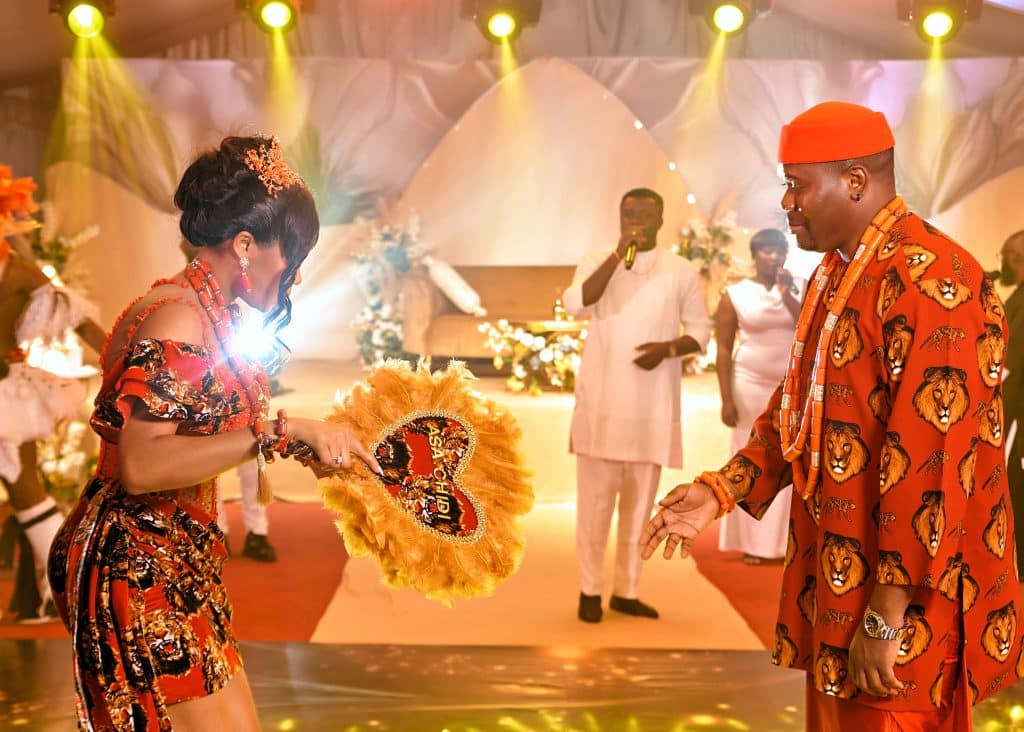
When the couple dances, guests often spray money on them as a gesture of love, joy and support. It is one of the most recognisable moments of a Nigerian wedding.
Here is the part people forget: it is not a competition. You do not need to out-spray the person next to you. A small, joyful spray beats a dramatic one that blocks the dance floor. And follow how the couple is doing it — many couples now use transfers, envelopes or other alternatives, so do what fits the celebration in front of you.
8. The dance floor belongs to everybody
You do not need to be a good dancer. You just need to be a willing one.
At some point, the music will switch to something you know, someone will pull you up, and the whole hall will be watching — in a good way. Dance badly, dance joyfully, and sit down when you are tired. Nobody came to judge your footwork. They came to celebrate.
9. Take your souvenirs, but do not fight for them
Party souvenirs are part of the fun. They are also, somehow, the cause of the most serious faces you will see all day.
Collect yours graciously, thank the person handing them out, and move on. The souvenir is a memory, not a prize. Fighting over it in front of the couple’s parents is not the memory you want to take home.
10. Photographs will happen whether you are ready or not
There will be a photographer. There will be a videographer. There will be at least ten phones pointed at you at any given moment.
Fix your gele, straighten your agbada, and assume you are on camera from the moment you walk in. The pictures from a Nigerian wedding do not stay in one album. They travel, and they last.
11. Do not leave before the couple has danced
You may be tired. Your feet may be asking questions. But the couple’s dance, and the spraying and singing that come with it, is the heart of the party.
Leave after that moment, thank the families on your way out, and you will leave with the full story. Leave before it, and you will spend the next week hearing about everything you missed.
Which of these rules have you broken before — and which one did you learn the hard way? Tell us in the comments.