
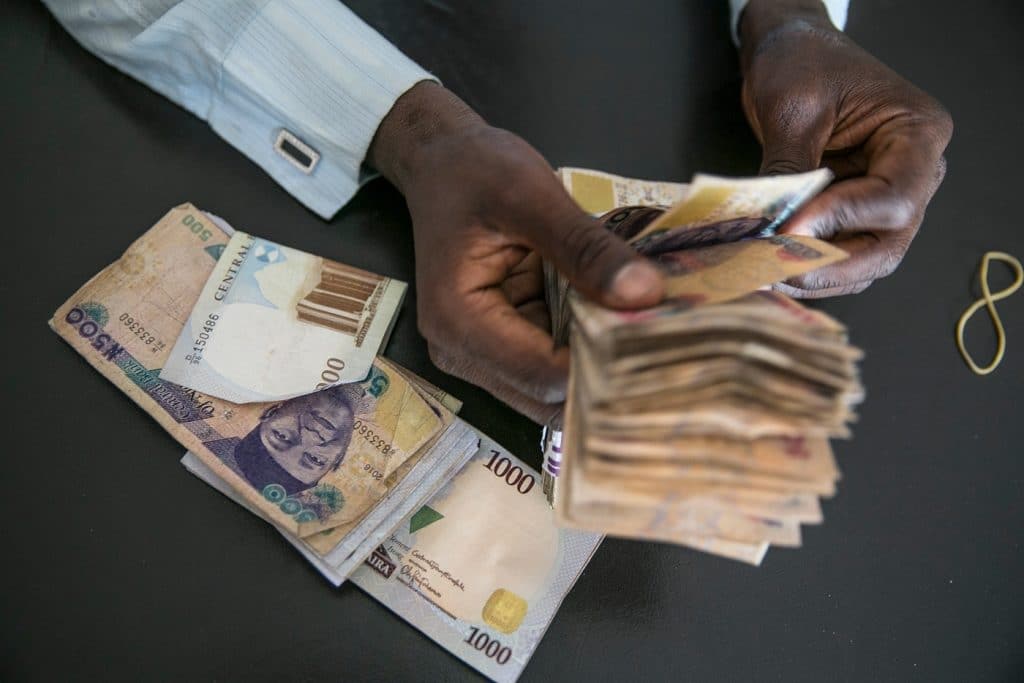
Your salary didn’t disappear. It leaked. ₦50 here, ₦500 there, a subscription you forgot, a data plan you renew without thinking. None of it feels like money — until you add it up. Here are the ten quietest leaks, what each one typically costs, and the one fix that stops it.
1. You pay to move your own money
Under the Central Bank’s revised 2026 charges, transfers up to ₦5,000 are free, ₦5,001–₦50,000 cost ₦10, and above ₦50,000 cost ₦50. Then there’s stamp duty: ₦50 on transfers of ₦10,000 or more, and since 1 January 2026 the sender pays it. So one ₦20,000 transfer to another bank costs you ₦60 before you’ve bought anything.
What it costs: about ₦1,200 a month if you do that transfer twenty times.
Fix it: batch your transfers. Send once, in one go. Keep the money you’ll spend in the same bank, and use free transfers under ₦5,000 where you can.
2. You pay for texts you never read
Your bank texts you every time money moves, and charges you for it. SMS alerts are charged on a cost-recovery basis, and the usual industry range is roughly ₦4 to ₦10 per message.
What it costs: roughly ₦200 to ₦500 a month for fifty alerts — ₦2,400 to ₦6,000 a year — for messages you probably never open.
Fix it: switch off SMS alerts today. Turn on email and in-app notifications instead. They’re free, and you’ll still catch fraud just as fast.
3. You pay for the nearest ATM
Your own bank’s ATM is free. Another bank’s machine is not: ₦100 per ₦20,000, plus a surcharge of up to ₦500 per ₦20,000 withdrawal.
What it costs: around ₦1,200 a month if you take ₦40,000 twice a month from the nearest machine instead of your own bank’s.
Fix it: plan one cash withdrawal a week from your own bank’s ATM, or go cashless. If you must use another bank’s machine, withdraw once, in a bigger amount — not four small times.
4. You buy data weekly instead of monthly
Data is not a small bill any more. A 20GB weekly plan is ₦5,000 and dies in seven days — buy it four times and you’ve spent ₦20,000 in a month. A monthly plan that fits what you actually use costs far less per GB: MTN’s monthly 20GB is ₦7,500, Airtel’s monthly 25GB is ₦8,000. The leak isn’t the data. It’s buying weekly by default, topping up a small bundle five times, or auto-renewing two lines at once.
What it costs: up to ₦20,000 a month on weekly renewals, for data a monthly plan would cover far cheaper — if your usage fits it.
Fix it: check what you actually used last month, buy one monthly plan that fits it, and switch off auto-renewal on the second line.
5. You pay for subscriptions you forgot
The money leaves quietly, on the same day every month. Netflix Standard is ₦6,500, Premium is ₦8,500. Spotify Premium Individual is ₦1,600. One service you watch, one music app you use, and one free trial you forgot to cancel — that’s easily ₦10,000 to ₦15,000 a month, over ₦120,000 a year, for something you may open twice a week.
What it costs: ₦10,000 to ₦15,000 a month on a forgotten stack.
Fix it: once a month, open your bank statement and circle every subscription. Cancel anything you haven’t used in two weeks. A free trial isn’t free if you forget to cancel it.
6. You pay someone to bring food you could cook
Nobody is saying never order food. The leak is ordering it by default. A single delivery order often carries delivery and service charges on top of the food — say ₦1,500 extra on an order, as a working example.
What it costs: three orders a week at that extra cost is ₦18,000 a month, over ₦200,000 a year, just for somebody to bring the food to your door.
Fix it: pick two delivery days a week and cook the rest. Batch-cook on Sunday. When you do order, order for two meals at once instead of paying the delivery fee twice.
7. You pay a little extra on every small buy
You pay with your card, the shop adds a charge, or you transfer and the fee and stamp duty follow you. One ₦50 here and ₦100 there doesn’t feel like anything.
What it costs: twenty small payments a month, each carrying its own little charge, can add up to ₦1,000 to ₦2,000 a month.
Fix it: carry a little cash for small buys, pay with the method that costs you least for that amount, and check the receipt. If a shop is adding a charge it shouldn’t, say so — and shop somewhere else next time.
8. Your money sits still and shrinks
Money in a current account earns nothing, and inflation eats it quietly every month. That’s not a charge on your statement, so nobody notices it — but ₦500,000 sitting still for a year loses far more buying power than any bank fee on this list.
What it costs: no figure on a statement — it shows up in what your money can’t buy a year later.
Fix it: keep one month of spending in your current account, and move the rest somewhere it at least keeps up — a savings account, a money-market fund, a fixed deposit, whatever you understand and can reach when you need it. Idle money isn’t safe money. It’s shrinking money.
9. Buy now, pay later — and pay again
Buy now, pay later feels free because the first payment is small. The leak is the second, third and fourth payments, plus the late fee when one of them lands on a week you’re already tight. A ₦60,000 item split into four payments is still ₦60,000 — and if you miss one, the penalty and the interest turn it into more.
What it costs: a big part of your salary, already spent before it arrives, if you stack two or three of these at once.
Fix it: one buy-now-pay-later at a time, and only for something you could have paid for in full anyway. If you can’t afford it in full, you can’t afford it in four parts either.
10. You have no number for the small stuff
This is the leak that hides all the others. No plan for airtime, no plan for transport, no plan for the small money you give away, no plan for the thing that breaks. So every small thing comes out of the same pot, and at the end of the month you can’t say where the money went — because it went everywhere, a little at a time.
What it costs: say ₦2,000 a day on unplanned small spending, as a working example — that’s ₦60,000 a month.
Fix it: give the small things their own envelope. A weekly cash amount for transport and small buys, in cash, in your pocket. When it’s finished, it’s finished. You don’t need a spreadsheet. You need a number, and a habit of stopping when you reach it.
Add it up
These are the worked examples in this post — not a survey, just the numbers above. Add up the ones with a monthly figure and you get roughly ₦92,000 to ₦98,000 a month: ₦1,200 on transfers, ₦200–₦500 on SMS alerts, ₦1,200 on ATMs, ₦10,000–₦15,000 on forgotten subscriptions, ₦18,000 on delivery, ₦1,000–₦2,000 on small charges, and ₦60,000 on unplanned small spending. That’s over ₦1.1 million a year — before you even count the data plan, or the money sitting idle, or buy-now-pay-later. Nobody hits every leak at once. Hit half of them and it’s still a salary line. None of these fixes is hard. They’re just decisions, made once, instead of leaks you pay for every month.
Featured image: Business Post.