This did not start in 2026.
It did not even start in 2023.
To understand what is happening now between the United States, Iran, and Israel, you have to go back more than 70 years.
Let us break it down properly.
1. Where It Really Began: Oil, Power and a 1953 Coup
In the early 1950s, Iran’s Prime Minister, Mohammad Mossadegh, decided to nationalize Iran’s oil industry.
At the time, British companies controlled most of Iran’s oil. That move threatened Western economic interests, and during the Cold War, Washington feared Iran could tilt toward the Soviet Union.
So in 1953, the US and UK backed a coup that removed Mossadegh and restored the Shah.
That decision did two major things:
- It protected Western oil interests in the short term.
- It planted deep resentment inside Iran.
That resentment still shapes Iran’s foreign policy today.
2. The Timeline: How It Escalated Over Decades
This conflict did not jump from diplomacy to missiles overnight. It built up slowly.
Here is the simplified timeline:
- 1953: US and UK backed coup installs the Shah
- 1979: Islamic Revolution removes the Shah. Iran becomes openly anti US and anti Israel
- 1979 to 1981: US embassy hostage crisis
- 1980s: Iran Iraq war, with Western alignment against Iran
- 1990s to 2000s: Iran expands regional influence through allied groups
- 2015: Nuclear deal temporarily eases tensions
- 2018: US withdraws from the deal. Sanctions return
- 2020: US kills Qasem Soleimani. Iran retaliates
- 2020 to 2023: Ongoing shadow conflict between Israel and Iran
- October 2023: Gaza war raises regional tensions
- April 2024: Iran launches direct attack on Israel after Israeli strike in Syria
- 2025: Escalations become more frequent
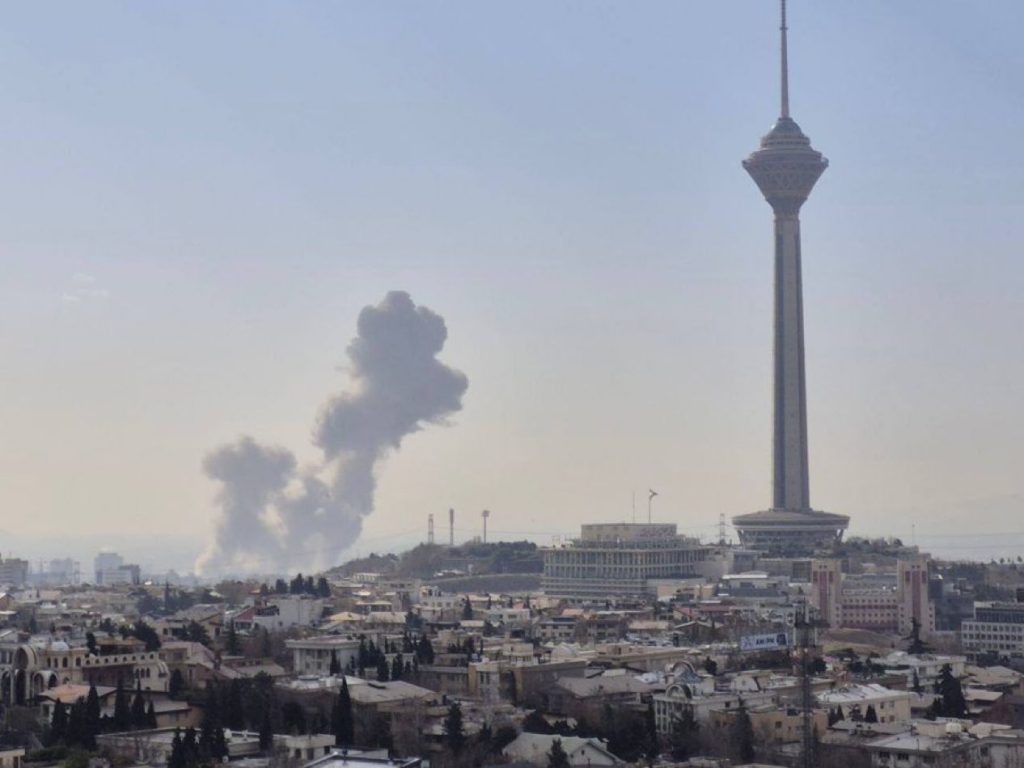
- February 2026: US and Israel strike Iran. Iran retaliates by targeting US bases across the Middle East
What we are seeing now is the result of decades of layered hostility.
3. What This Conflict Actually Is
It is easy to frame this as religious. It is not that simple.
At its core, this is about power and regional dominance.
- Iran is expanding influence across the Middle East.
- Israel sees that expansion as an existential threat.
- The United States backs Israel while protecting its own military and economic interests.
Everything else, including proxy groups, airstrikes, sanctions, and diplomacy, sits on top of that core struggle.
4. How This War Is Fought
This is not traditional battlefield warfare.
Most of it happens through:
- Covert operations
- Targeted airstrikes
- Cyber attacks
- Supply chain disruption
Then occasionally, it bursts into direct confrontation, which is why it feels sudden, even though it is not.
5. Why the Entire World Is Watching: Oil and trade, not just War
This is not just about missiles. It is about energy and trade.
The Middle East sits at the center of:
- Global oil supply
- Major shipping routes
- Critical energy infrastructure
When tensions rise there:
- Oil prices spike
- Shipping costs increase
- Insurance premiums surge
- Global supply chains tighten
That is how a regional conflict becomes a global economic issue.
6. The real risk point: Disruption to shipping routes
The biggest danger is not just military strikes, it is disruption to oil and shipping lanes.
If major routes are affected:
- Oil supply tightens
- Goods move slower
- Prices rise globally
That is how economic shock spreads beyond the region.
7. What It Means for North America, Europe and Asia
Even without direct involvement, the effects are immediate.
- North America: Higher fuel prices, inflation pressure, market volatility
- Europe: Energy vulnerability and cost of living strain
- Asia: Oil supply exposure and rising production costs
No major economy is insulated from an energy shock at this scale.
8. What It Means for Nigeria
Nigeria sits in a complicated position, exposed but potentially benefiting.
On one hand:
- Higher oil prices can increase government revenue and foreign exchange inflows may rise
On the other hand:
- Petrol prices increase
- Transport costs rise
- Goods become more expensive
So while the country might earn more, individuals often feel worse off.
Key Pressure Points for Nigeria:
Fuel:
Global oil prices feed into local petrol pricing
FX, Naira:
Global uncertainty strengthens the dollar
Aviation fuel:
Air travel and cargo costs increase, affecting business and logistics.
Shipping:
Higher insurance and rerouting costs raise the price of imports.
Food:
Fertilizer and logistics disruptions push food prices up
This is how a distant geopolitical conflict becomes a local economic problem.
9. What Happens Next? Three Possible Paths
There are three realistic scenarios:
- Contained Conflict:
Tensions cool. Markets stabilize. - Prolonged Escalation:
Ongoing strikes keep energy and shipping costs elevated. - Major Disruption:
Serious interference with oil routes triggers global economic shock.
The Bottom Line
This is not just a Middle East conflict.
It is a system level event affecting:
- Energy
- Trade
- Inflation
- Cost of living
And whether you are in Lagos, London, or Los Angeles, you are part of the outcome.