
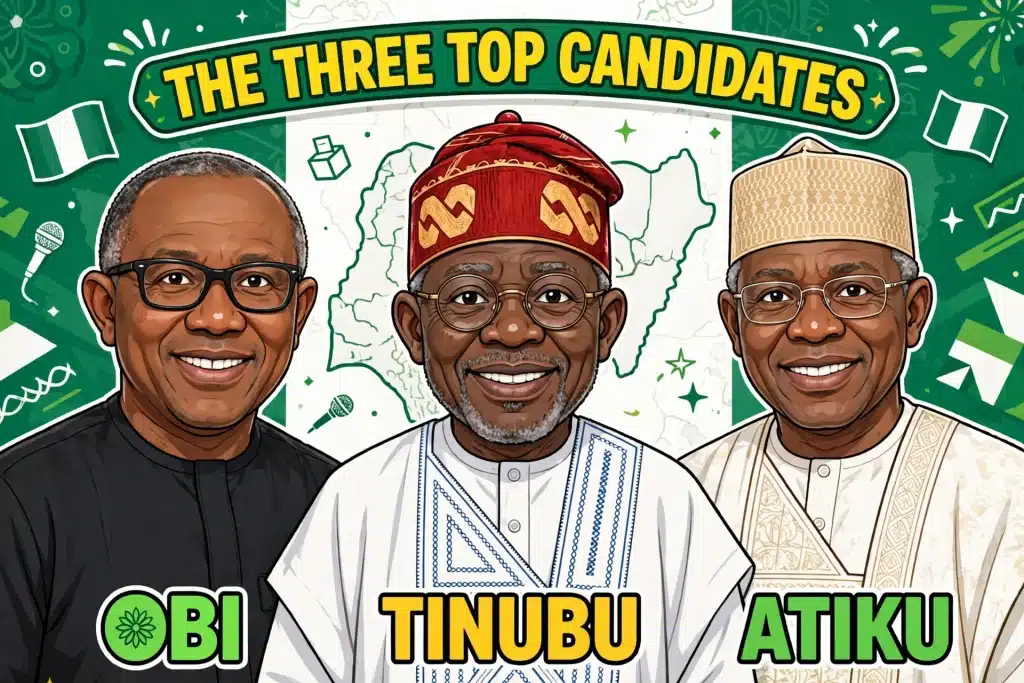
Nigeria votes for a new president on 16 January 2027, and 18 candidates are on the ballot. Between now and then, you will hear a lot of noise about personalities, parties and promises. This quiz cuts through all of that. Below are seven questions about the things that will actually shape your life — fuel, light, school, hospitals, jobs, security and pay. Each answer is a real position from a real candidate. The names are hidden. Pick the answer you agree with, keep a note of your letters, and only scroll to the reveal at the end.
This is the first piece in The Ballot Box, our election series. It is neutral by design: no candidate is praised or attacked here, and the positions are presented as the candidates stated them.
How it works
Seven questions. One answer each. Write down your letters as you go. The reveal at the bottom shows whose position you picked each time. Count them up: the candidate whose name appears most is the one whose stated positions line up with yours most often.
1. Fuel: what should happen to petrol subsidy?
Petrol prices have been the biggest kitchen-table argument in Nigeria since the subsidy was removed in 2023. Where do you stand?
A: Cap petrol at ₦200 a litre by reserving crude for local refineries and selling the other products to keep the price down.
B: Keep the subsidy gone for good. There is no going back.
C: Bring back a production-based subsidy, tied to refining fuel at home, with a spending cap and independent audits.
D: Keep the subsidy but strip out the corruption, so Nigerians pay a fair, transparent price.
2. Power: how do we fix electricity?
A: Add at least 10,000 megawatts in four years, with an emergency on generation, transmission and distribution.
B: Scrap the Band A to E tariff system, end discriminatory billing, and keep electricity subsidies in place.
C: Aim for 50,000 to 75,000 megawatts, built on gas, solar, hydro and decentralised generation.
D: Stick with the Electricity Act: let states generate their own power, keep fixing the grid, and end estimated billing.
3. Education: how should schooling be paid for?
A: Scholarships, not loans. Review the student loan scheme and consider forgiving student debt.
B: Interest-free student loans, so nobody is shut out of university because they cannot pay.
C: Overhaul basic education, pay teachers among the best in the country, and subsidise schooling so no child is turned away for lack of money.
4. Healthcare: what should change first?
A: Raise health spending to at least 10% of GDP, and put a working health centre in every ward.
B: Renovate 17,000 primary health centres and double the number of Nigerians covered by health insurance.
C: Overhaul the system: expand affordable basic care, fix staff shortages and pay health workers properly.
5. The economy: how do we create jobs and bring prices down?
A: Stay the course on the current reforms — subsidy removal, a unified exchange rate and tax reform — and take four more years to consolidate them.
B: Move from consumption to production: farm and manufacture more at home, and back small businesses with cheaper credit.
C: A $10 billion fund for young people and women to start businesses, reopen the land borders, and revive the ports in the East.
6. Security: how do we make the country safer?
A: Recruit and equip many more security personnel, and improve their welfare, starting in the first 100 days.
B: Create state police now.
C: State police, yes — but hold off creating it until after the 2027 election, and run security on intelligence and technology in the meantime.
7. Pay: what should happen to the minimum wage?
A: A ₦500,000 monthly living wage.
B: Keep the ₦70,000 minimum wage until its scheduled review in June 2027.
C: Raise it substantially from day one, alongside measures to hold prices down.
The reveal
Question 1: A — Adewole Adebayo (SDP). B — Bola Tinubu (APC). C — Atiku Abubakar (ADC). D — Peter Obi (NDC).
Question 2: A — Peter Obi (NDC). B — Atiku Abubakar (ADC). C — Adewole Adebayo (SDP). D — Bola Tinubu (APC).
Question 3: A — Atiku Abubakar (ADC). B — Bola Tinubu (APC). C — Peter Obi (NDC).
Question 4: A — Peter Obi (NDC). B — Bola Tinubu (APC). C — Atiku Abubakar (ADC).
Question 5: A — Bola Tinubu (APC). B — Peter Obi (NDC). C — Atiku Abubakar (ADC).
Question 6: A — Atiku Abubakar (ADC). B — Bola Tinubu (APC). C — Peter Obi (NDC).
Question 7: A — Omoyele Sowore (AAC). B — Bola Tinubu (APC). C — Atiku Abubakar (ADC).
What your result means — and what it doesn’t
Count how many times each name came up. The name that appears most is the candidate whose stated positions line up with yours most often, on these seven questions.
That is all it means. It doesn’t mean that candidate will win, or that they are the most honest, or that they can deliver what they promise. It measures agreement with what they have said they will do — nothing more. Some candidates have changed their minds on some of these issues, and a promise is not a plan: how a policy would be paid for, and whether it can actually happen, are separate questions, and we will be looking at those in the coming weeks in The Ballot Box.
Why only these names? Because 18 candidates are on the ballot, and this quiz uses the ones with clear, published positions on each question. The rest of the field is real, and their names are in the reveal of the wider Ballot Box series — they simply had no clear published position on that particular theme.